Go to USC home page USC Logo SC CHILDREN'S JUSTICE ACT TASK FORCE: CHILDREN'S LAW OFFICE
UNIVERSITY OF SOUTH CAROLINA

CHILDREN'S LAW CENTER HOME

USC SCHOOL OF LAW

WHO WE ARE

TRAINING EVENTS

LAW STUDENT INFO

PUBLICATIONS

SC STATUTES

CASE LAW SUMMARIES

DISPROPORTIONATE MINORITY CONTACT

LEGAL FORMS

EXPERT WITNESSES

LINKS
Need Legal Help?
USC  THIS SITE

PURPOSE      |      MEMBERS     |      RECOMMENDATIONS    |    BYLAWS(PDF)


PURPOSE
The federal Children's Justice Act provides grants to states for the development and operation of programs designed to improve the handling of child abuse and neglect cases, the handling of suspected maltreatment related fatalities, and the investigation and prosecution of child abuse and neglect. Cases involving child sexual abuse or exploitation are a particular emphasis. Funds may be utilized for programs designed to improve the investigative, administrative, and judicial handling of child abuse and neglect cases; experimental, model, or demonstration programs; and reform of state laws and procedures.

To be eligible for these funds, states must establish and continue a multidisciplinary task force which is charged with the development and implementation of recommendations in the areas described above. A task force was convened in South Carolina in 1994 by the Department of Social Services, which became grantee for the funds. A wide range of disciplines are represented on the task force.

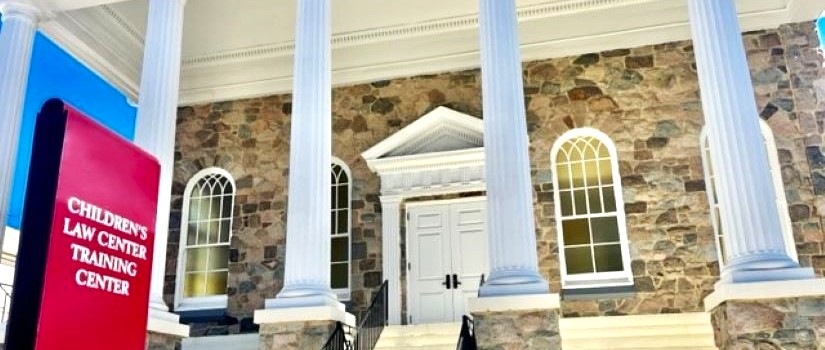
The Department of Social Services contracted with the University of South Carolina to establish the Children's Law Center, in accordance with the task force's recommendation. The Children's Law Center is administered by the University of South Carolina School of Law. The Children's Justice Act grant provides a portion of the project's support.

In April of 2004, the task force adopted recommendations designed to improve the handling of child abuse and neglect cases in South Carolina. Work toward implementation of these recommendations continues through the task force and its committees.


RETURN TO TOP

MEMBERS
Mr. Jeff Moore, Chair
SC Sheriff's Association
Ms. Beebe James
Children's Advocacy Center Coordinator
Ms. Elizabeth Ralston, Ph.D., Vice-chair
Lowcountry Children's Center
The Honorable Deadra L. Jefferson
Circuit Court Judge
Ms. Susan Anderson
SC Department of Social Services
Ms. Dateria Johnson
Children's Advocacy Center of Spartanburg
Ms. Melanie Asbell
Greenville County DSS
Ms. Pam Koffa
Parents Anonymous of SC, Inc.
Ms. Joan Assey
SC Court Administration
Ms. Patsy Lightle
State Law Enforcement Division
Ms. Sheri Church
Solicitor's Office
Ms. Andrea Loney
Attorney
Ms. Joy Davis
Tenth Circuit Solicitor's Office
Mr. Gordon McBride
Attorney
Ms. Melissa Dunlap, Esq.
Div. of Foster Care Review
Ms. Rochelle McKim-Caton, Esq.
Protection & Advocacy for People with Disabilities
Ms. Cheryl Elrod
Div. of Victim Assistance
Ms. Carolyn Orf
SC Foster Care and Adoptions
Ms. Emily S. Freeman
SC Appleseed Legal Justice Center
Ms. Julia Roberts
SC Guardian ad Litem Program
Ms. Erin S. Gaddy
Fifth Circuit Solicitor's Office
Ms. Pam Robinson, Esq.
USC School of Law
The Honorable Paul W. Garfinkel
Family Court Judge
The Honorable Wyatt T. Saunders
Family Court Judge
Ms. Betsy Gibbs, MD
CMAC
Ms. Caroline Streater, Esq.
SC Department of Juvenile Justice
Ms. Ellen Hamilton, Director
Pee Dee Coalition Against Domestic
and Sexual Assault
Ms. Beth Williams
SC Department of Social Services
Mr. Mark S. Hammond
Aiken County Sheriff's Office
Ms. Mary C. Williams, Esq.
SC Department of Social Services
Mr. Timothy D. Harbeson
Attorney
Ms. Valerie Williams
South Carolina Law Enforcement Division
The Honorable Roger E. Henderson
Family Court Judge
Dr. Nancy A. Henderson
Children's Advocacy Center of Spartanburg
Ms. Beverly J. Ingram, M Ed
The Center for Child and Family Studies
USC College of Social Work


RETURN TO TOP

RECOMMENDATIONS 2003-05
Adopted April 25, 2003

Category I:
  1. Pursue and develop a system that provides clear, meaningful, comprehensive, and unduplicated statistical reports on the occurrence and judicial outcomes of child abuse cases, in collaboration with child protection, law enforcement, court administration, and other appropriate agencies.
     
  2. Provide Finding Words (forensic interviewing training) for counties not yet trained and for new team members in counties that previously completed training. Develop and offer advanced course for forensic interviewers.
     
  3. Provide investigative protocol development training to county multi-disciplinary teams. At least four counties per year should participate in this training, designed to improve and standardize investigations throughout the state. Children's Law Center will provide the training in coordination with a selected national training organization.
     
  4. Provide support to the S.C. Network of Children's Advocacy Centers for the continued development of children's advocacy centers, including the provision of training for centers staff and multi-disciplinary team members.
     
  5. Develop on-line training modules for family court judges on permanency planning and other relevant issues. Make available to judges in collaboration with S.C. Court Administration.
     
  6. Review state guidelines for medical response to child abuse, including evidentiary kits, protocols, and definitions. Propose revisions as appropriate. Recommend adopting the medical examination guidelines of the American Professional Society on the Abuse of Children.
     
  7. In collaboration with the S.C. Prosecution Commission, update and distribute prosecutor=s manual for child abuse cases.
     
  8. Provide training on development of treatment/placement plans to improve accountability and consistency.

Category II:

  1. Review the existing model program in the state addressing the overlap of child maltreatment and domestic violence. Offer support in its adaptation and expansion across the state.
     
  2. Support the Court Coordination Task Force in its effort to develop procedures for coordination of family court child protection and criminal child abuse proceedings. In the alternative, develop suggested practice guidelines for handling these cases with particular emphasis on the problem of delays in family court merits hearings.

Category III:

  1. Study the possible reclassification of lewd act as a violent crime and, if appropriate, recommend legislative action to have this crime reclassified or incorporated into the criminal sexual conduct with a minor statute.
     
  2. Recommend to DSS that attorneys, including full-time county attorneys and contract attorneys, be supervised by the DSS Office of General Counsel legal staff in order to provide a system of accountability and uniformity.
     
  3. Recommend and support the expansion of technology in family court including the immediate distribution of orders in appropriate cases.
     
  4. Pursue statutory amendments to require: (a) that cases be completed within designated timeframes; (b) that a timeframe be established for holding TPR hearing after filing of complaint; (3) that ASFA requirements regarding permanency planning hearing be included.
     
  5. Seek passage of a court rule to establish a timeframe for receipt of court appointment orders, enabling attorneys to have sufficient time to prepare cases
    and decreasing continuances.
     
  6. Advocate for enactment of a statute allowing admission of out-of-court statements in criminal child abuse cases.
     
  7. Monitor any legislation impacting guardians ad litem in child maltreatment cases, and make that information available to trained guardians.
RETURN TO TOP
USC LINKS: DIRECTORY MAP EVENTS VIP

SITE INFORMATION